Plan Your Visit to Auschwitz-Birkenau
The former Nazi German concentration and extermination camp near Oswiecim, Poland: entry reservations, guided tours, and practical visiting information.

The former Nazi German concentration and extermination camp near Oswiecim, Poland: entry reservations, guided tours, and practical visiting information.
If you only need a standard entry ticket for Auschwitz-Birkenau, the official site is usually the best place to buy: current prices, timed slots, and exhibition notes come from the museum. If you want a smoother booking and check-in flow (mobile tickets, free cancellation on many offers, reserved entry, or city museum passes), a trusted ticketing partner can be a good alternative. Confirm the visit date before you book.

Best when you just need permanent-collection admission at Auschwitz-Birkenau. Timed entry is common in peak season.
Useful for reserved slots, mobile tickets, flexible cancellation on many listings, or stacking Auschwitz-Birkenau with other Poland sights in one plan.
Choose the official desk for free entry slots and plain museum booking. Choose a partner for hotel pickup from Krakow, a guided educator, or a same-day combo with Wieliczka.
Hand-picked Auschwitz-Birkenau tickets and tours on Headout. Prices and availability update on the partner site; confirm inclusions before you book.


Auschwitz & Birkenau Guided Tour with Transfers & Optional Private Tour


Auschwitz-Birkenau & Wieliczka Salt Mine Guided Tour
Auschwitz-Birkenau Guided Tour with Hotel Transfers

Auschwitz-Birkenau is preserved as a memorial and cemetery. Visitors are asked to maintain quiet, respectful conduct throughout the grounds.
Auschwitz I preserves original brick camp buildings and exhibitions. Auschwitz II-Birkenau, about 3 km away, is the much larger site of mass extermination, reached by a free shuttle bus.
Exhibits include personal belongings, photographs, and testimony documenting the murder of over 1.1 million people. The Memorial recommends the visit is not suitable for young children.
Individual visitor slots and guided tour places should both be booked online in advance, especially from April through October when the Memorial is busiest.
Large bags and backpacks above a small size are not permitted inside and must be left in the cloakroom. Only small bags are allowed past security screening.
Most visitors arrive from Krakow by organized tour bus, public bus, or train plus local transfer. A paid parking lot is available for those driving themselves.
Hours, prices, and access rules change. Confirm details on the official Auschwitz-Birkenau site (or your partner booking confirmation) before you go.
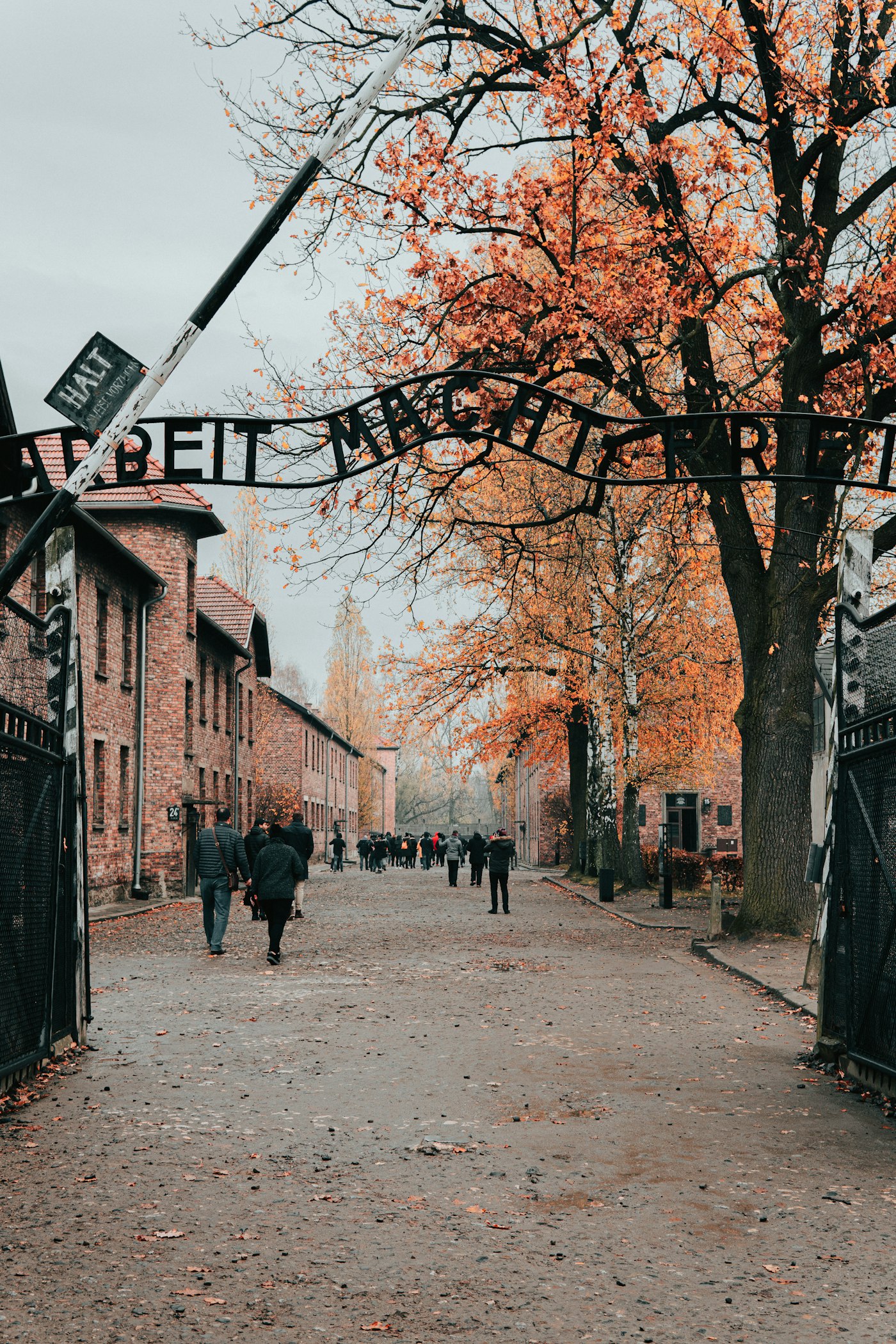
The camp's original entrance, preserved with its "Arbeit Macht Frei" ironwork sign.
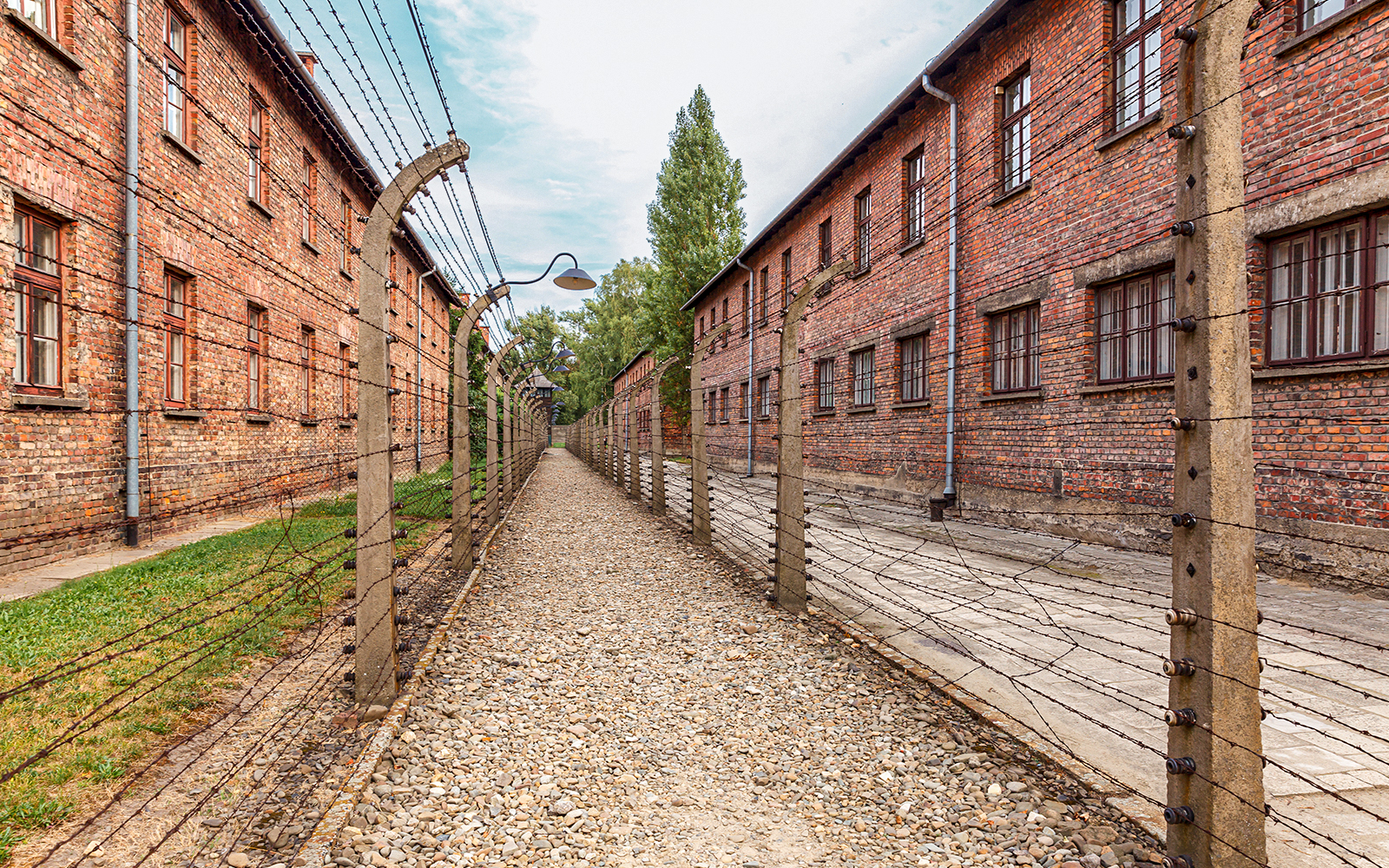
Former prisoner barracks at Auschwitz I now house exhibitions on daily camp life, deportations, and the Holocaust across Europe.
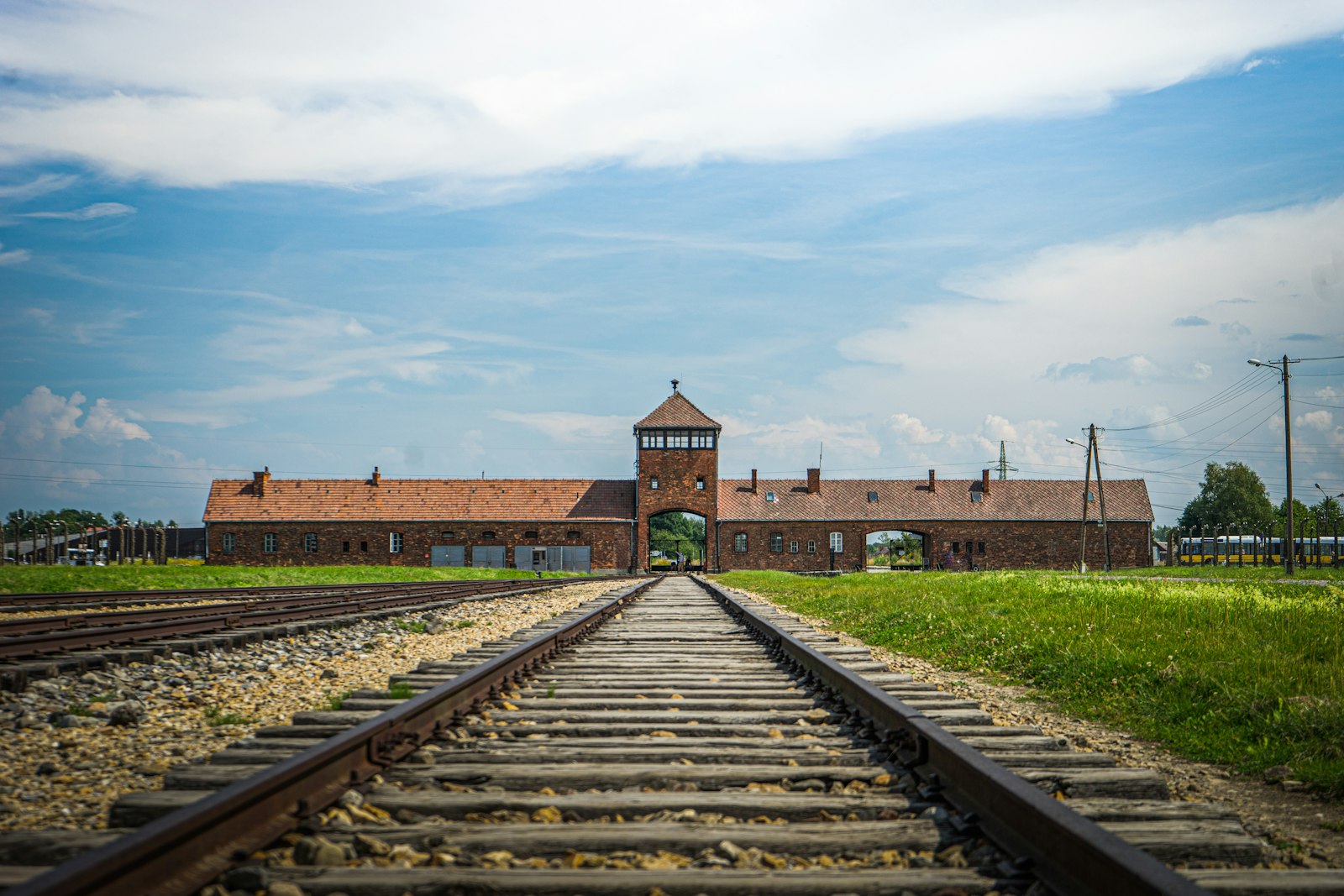
The rail entrance to Auschwitz II-Birkenau, one of the most recognized images associated with the camp.
Where trains carrying deportees arrived and selections were made on arrival.
Destroyed by the retreating German forces in 1945; their remains are preserved as they were found.
A memorial at Birkenau dedicated to all who were murdered at the camp.
Preserves photographs found among victims' belongings, part of Birkenau's exhibitions.
Is entry to Auschwitz-Birkenau free?
Yes, admission to the Memorial is free of charge. During busier hours, individual visitors without a guide can only enter at specific times, and a paid guided study visit is often required otherwise.
Do I need to book in advance?
Yes, especially from April through October. Both individual entry slots and guided tour places are limited and commonly book out days or weeks ahead.
How much time should I plan?
At least 3.5 hours to see both Auschwitz I and Auschwitz II-Birkenau. Many visitors spend closer to half a day.
Is it appropriate for children?
The Memorial recommends the visit is not suitable for children under 14, given the disturbing nature of the exhibits.
How do I get there from Krakow?
By organized tour bus, public bus from Krakow's main bus station, or train to Oswiecim followed by a short local transfer. Self-driving with on-site parking is also an option.
What are the rules for bags and photography?
Large bags and backpacks must be left in the cloakroom. Photography is allowed in most outdoor areas but restricted in specific rooms out of respect for victims.
Auschwitz-Birkenau was the largest of the Nazi German concentration and extermination camps, operated between 1940 and 1945 near the Polish town of Oswiecim. More than 1.1 million people, the majority of them Jews, were murdered there, alongside Poles, Roma, Soviet prisoners of war, and others.
Since 1947, the site has been preserved as the Auschwitz-Birkenau State Museum, encompassing the original Auschwitz I camp and the much larger Auschwitz II-Birkenau grounds nearby. It is a UNESCO World Heritage Site and one of the most visited Holocaust memorial and education sites in the world.